


Bourbon Heritage Month Starts Tuesday (2026): How to Run a Four-Bottle Flight at Home — Glass, Pour Order, Water, and the 8 Bottles Worth It

National Bourbon Heritage Month starts Tuesday, September 1. Most people mark it by buying one nicer bottle than usual and drinking it the way they drink everything else. That's fine, but it wastes the occasion. Thirty days is enough time to actually learn something about your own palate, and the tool for that is a flight — four bottles, small pours, side by side, in a deliberate order.
A flight is not a tasting event with a host and a spit bucket. It's four glasses on a table on a Thursday. Done properly it will tell you more in forty minutes than a year of casual pours, because comparison is the only way most people can identify what they're tasting. A bourbon on its own is "good." A bourbon next to three others is high-rye, or under-aged, or over-oaked, or exactly what you want.
Here's how to set one up, what to pour, in what order — and the eight things from our bourbon collection that make it work.
The 8 bottles and one glass in this guide


The glass matters more than you want it to
This is the part people roll their eyes at, and it's the part with the biggest effect for the least money.
A rocks glass has a wide mouth. Wide mouths let ethanol vapour disperse before it reaches your nose, which sounds pleasant but means you lose most of the aroma. And since something like eighty percent of what you experience as flavour is retronasal olfaction — smell, arriving from the back of the mouth — losing the aroma means losing the whiskey. A rocks glass is a fine vessel for a drink. It is a poor instrument for tasting one.
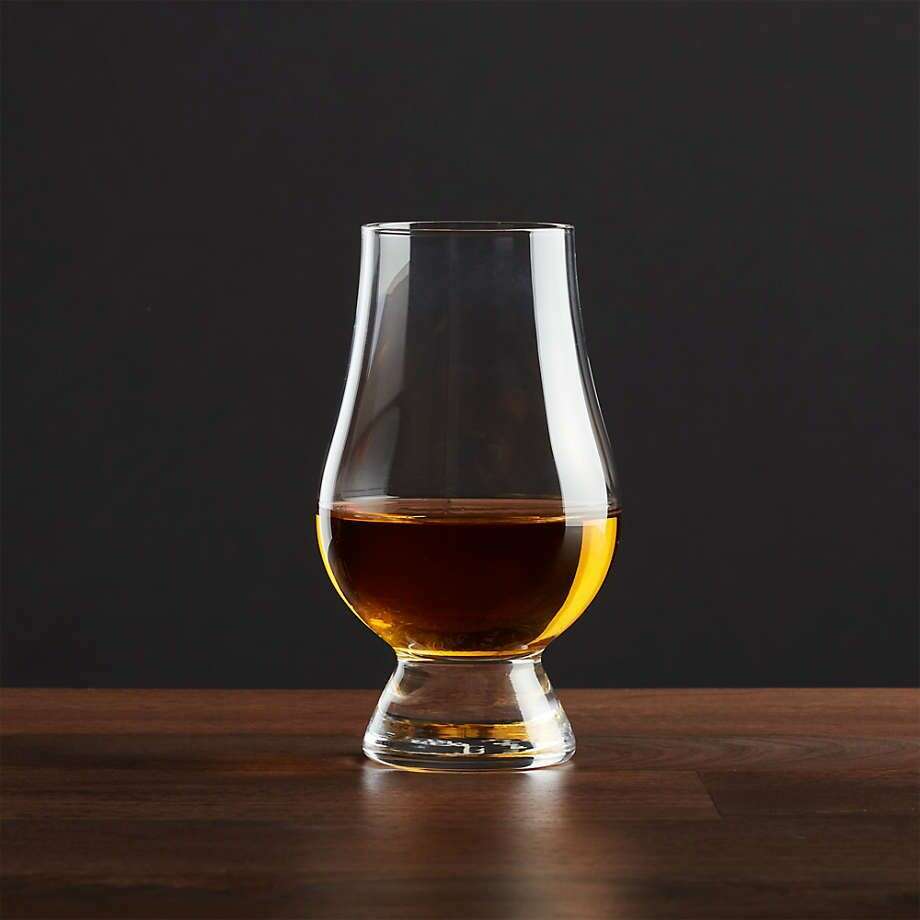
A tulip-shaped nosing glass does the opposite. The bowl gives surface area for the spirit to open; the tapered neck concentrates the vapour and delivers it in a narrow column. On a 100-proof pour the difference is obvious. On a 120-proof pour it is the difference between finding fruit and oak and finding nothing but heat.
Amerit Glencairn Glass ($24.99) is the standard shape, and at under twenty-five dollars it is the highest-return purchase in this entire article. Buy four if you're running flights regularly — you want one glass per pour, not one glass rinsed four times, because rinsing between pours strips the water film that helps the next whiskey open.
Two practical notes. Don't chill the glasses; cold suppresses volatility and mutes everything. And pour small — half an ounce, no more. A flight of four half-ounce pours is two ounces total, which is about one normal drink. That is the point. You're tasting, not drinking.
Pour order: always low proof to high
Palate fatigue is real and it is not subtle. Ethanol is mildly anaesthetic, and a 120-proof pour will genuinely dull your ability to perceive the next one for several minutes. Start high and everything after it tastes flat and sweet. Start low and each step up reads clearly.
So: ascending proof, always. Not ascending price, not ascending age, not "saving the best for last." Proof.
Here is a four-bottle ladder that works, built entirely from bottles in stock this morning:
- Maker'S Mark Bourbon 375Ml ($22.99) — 90 proof, wheated. The softest, sweetest entry point, and the half-bottle format is exactly right for a flight bottle you don't need much of.
- Evan Williams Bottled-in-Bond ($38.09) — 100 proof, four years old, one distilling season, one distillery. The clean reference bourbon against which everything else is measured.
- Elijah Craig Small Batch Kentucky Straight Bourbon Whiskey ($40.99) — 94 proof but carrying real age. Slots here because the extra oak reads as heavier than the number suggests.
- Wild Turkey Rare Breed Bourbon ($63.99) — barrel proof, north of 116. The finish line, and the pour where the glass earns its money.
If you'd rather run a longer ladder, Heaven Hill 7 Year Bottled In Bond Kentucky Straight Bourbon Whiskey ($58.09) sits neatly between steps two and three — same 100 proof as the Evan Williams but three years older, which isolates age as a single variable more cleanly than almost any other pairing you can buy. And Elijah Craig Barrel Proof Batch C925 Bourbon ($69.99) is the alternative closer if you want the Heaven Hill house style at full strength rather than the Wild Turkey one.
Water is not cheating
Add a few drops of still water to a high-proof pour and it will change materially — usually opening up fruit and floral notes that were buried under alcohol. This isn't a matter of taste or toughness. Diluting drops the ethanol concentration, which changes which aroma compounds volatilise at room temperature, and some of them simply cannot reach your nose at cask strength.
Use a pipette or a straw, not a pour from a glass. Three to five drops on a half-ounce, then wait thirty seconds. Taste before and after and note which direction it moved. On the Elijah Craig Barrel Proof Batch C925 Bourbon or the Rare Breed, most people find the second version more interesting than the first. On the 90-proof Maker's, water mostly just thins it — which is itself a useful data point about where the technique stops helping.
Still water, not sparkling, not mineral-heavy, and room temperature. We went into why the water actually matters — in the bottle and in the glass — in this guide.
What to actually pay attention to
Four things, in order, and it helps to say them out loud or write them down. Memory for smell is famously poor and famously easy to overwrite.
Colour. Least informative, but free. Darker usually means older or more heavily charred — usually, not always, since some producers use colouring-free but still vary wildly by warehouse position.
Nose. Mouth slightly open, glass an inch below your nose, short sniffs. Do not stick your nose in the glass and inhale; you will get an ethanol burn that shuts down your sense of smell for a minute. Look for the obvious categories first: fruit, vanilla, caramel, spice, oak, grain, leather, smoke.
Palate. Small sip, hold it, let it coat. The first sip of any flight is a calibration sip and will taste mostly of alcohol — that's normal, and it's why you never judge a whiskey on the first sip. The second one tells you the truth.
Finish. How long does it last, and what's left? A long finish that goes bitter is a different thing from a short clean one. Neither is objectively better, but knowing which you prefer is genuinely useful when you're buying.
If you want the full mechanics of nosing and scoring, our beginner's tasting guide covers the process in more depth than there's room for here.
Three flights worth running in September
The age flight. Evan Williams Bottled-in-Bond (4 years) → Heaven Hill Bottled-in-Bond (7 years) → Elijah Craig Small Batch (12 years). All Heaven Hill, all the same house yeast, two of the three at identical 100 proof. The only meaningful variable is time in oak, and tasting it in sequence is the fastest way to understand what age statements are actually buying you — and where the returns start to flatten.
The proof flight. Maker's Mark → Evan Williams Bottled-in-Bond → Wild Turkey Rare Breed. 90 to 100 to 116-plus, same session. This one converts people to barrel proof faster than any argument; if it does, barrel proof bourbon 101 is the follow-up.
The barrel flight. Woodford Reserve Double Oaked Kentucky Straight Bourbon Whiskey ($69.99) against a standard bourbon of similar proof. Double Oaked goes into a second, deeply toasted and lightly charred barrel, and tasted against a single-barrel-matured whiskey the difference is almost comically legible — dessert-forward, dark sugar, noticeably more oak tannin on the finish. It's the clearest single demonstration of what a finishing barrel does.
If you're hosting rather than studying
Flights work for groups, with two adjustments. Pour quarter-ounces instead of halves, because four people going through four bottles adds up fast. And put out something plain to eat between pours — unsalted crackers, plain bread, still water. Not cheese, not chocolate, nothing with its own agenda. You want a palate reset, not a pairing.
If some of your guests aren't bourbon drinkers, don't build the flight around converting them; build it around finding the one they like. Start lower and softer than you think you need to — the wheated Maker's is the right opener — and let them skip the barrel proof entirely. This guide to bourbon for people who think they don't like bourbon is essentially a whole article on that problem. And if the flight turns into dinner, the proof ladder that makes food pairing work picks up exactly where this leaves off.
For a ready-made version, our sampling kits and gift sets are built around the same logic and take the assembly work out of it.
Build your September lineup
You need one glass, four bottles and about forty minutes. That's the entire barrier to entry, and the glass is the only part most people are missing.
Start with the bourbon collection if you're building a ladder from scratch, or the best sellers if you want the well-trodden options. The wider whiskey collection is worth a look if you'd rather run a cross-category flight — bourbon against rye against Tennessee whiskey is a genuinely instructive way to spend an evening.
And if you want the background on why September carries this weight at all, our Heritage Month guide covers the 1964 Congressional resolution and what it actually did. Thirty days start Tuesday. Prices and stock above are live as of this morning.

