


Bourbon at the Dinner Table (2026): The Proof Ladder That Makes Food Pairing Work — and 8 Bottles for Five Courses

Nearly every bourbon pairing guide ever written is about a grill. Ribs, brisket, wings, burgers — smoke and char and a bottle of something loud. That advice is fine, and we have written plenty of it ourselves: our game-day pairing guide and our BBQ and bourbon guide both live squarely in that world. But it has quietly convinced a lot of people that bourbon is a patio spirit that cannot be brought indoors, and that is simply not true. Bourbon belongs at a set table with courses and plates and a tablecloth just as comfortably as wine does. It just needs a different rule.
Here is the rule, and it is going to sound almost too simple: pair on proof first, flavour notes second. Not the tasting-note poetry on the back label. Not whether the distiller says "hints of baking spice." Proof. The alcohol percentage in the glass is the single variable that decides whether a pour flatters a dish or flattens it, and once you organise a dinner around a proof ladder — lighter pours early, heavier pours late — the pairings mostly solve themselves.
This guide walks that ladder through five courses, from a cold appetiser to dessert, with eight bottles that are in stock right now. Bourbon Heritage Month starts next week, which makes September the best month of the year to put bourbon on the dinner table instead of next to the smoker.
The eight bottles in this guide, low proof to high


Why proof beats flavour notes
Ethanol does two things to your palate that have nothing to do with taste. It carries aroma — volatile compounds ride out of the glass on alcohol vapour, which is why a barrel-proof pour smells enormous before you have touched it. And it desensitises. Alcohol above roughly 100 proof creates a genuine physical burn on the tongue and soft palate, and for a few seconds afterwards that part of your mouth is measurably worse at detecting delicate flavour.
That second effect is the whole game. Serve a 120-proof barrel-proof bourbon alongside a plate of oysters or a mild goat cheese and the bourbon does not "overpower" the food in some vague way — it temporarily switches off your ability to taste the food at all. The reverse failure is just as real: an 80-proof pour next to a heavily charred, heavily salted short rib disappears entirely. It reads as sweet water.
So the ladder. Roughly:
- 80–86 proof — raw and cold things, delicate cheese, seafood, salads, anything you would otherwise serve a crisp white wine with.
- 90–94 proof — the broad middle. Roast chicken, pork, mushrooms, hard cheeses, most weeknight food.
- 100–107 proof — red meat, fat, salt, smoke, anything with a hard sear on it.
- 110+ proof (barrel proof) — dessert, chocolate, coffee, blue cheese, or nothing at all.
Flavour notes are the tiebreaker within a rung, not the thing that gets you to the right rung. If you have never sat down and worked out what you actually taste in a pour, our guide to nosing, sipping and scoring bourbon is the place to start, and it will make everything below land harder.
Course one: the cold opener (80–86 proof)
Shrimp cocktail, oysters, a cured-fish plate, a bowl of salted almonds, a soft young cheese. Cold food is low-aroma food — chilling suppresses volatility — so anything strong served against it wins by default. This is the rung where cheap, low-proof, unfashionable bourbon is genuinely the correct answer, and where the expensive bottle is the wrong one.
Old Grand Dad Whiskey ($22.99) at 80 proof is the workhorse here. It is built on Beam's high-rye mash bill, so it brings a dry, peppery, almost herbal edge rather than a wave of sugar, and that dryness is what a shrimp cocktail or a plate of prosciutto actually wants. Evan Williams Black ($24.09) at 86 proof goes the other direction — rounder, more caramel, more banana — and it is the better call against a soft cheese or a fruit-and-nut board.
Serve both of these with one ice cube or a small splash of water. You are not trying to make a statement in course one.
Course two: the cheese and charcuterie board (86–94 proof)
The cheese course is where bourbon quietly outperforms wine, and it is worth being specific about why. Fat coats the tongue. Wine's acidity cuts through it; bourbon's alcohol dissolves it. Both work, and the bourbon route has the advantage that its own sweetness plays against salt in a way most dry wines cannot.
Match the intensity of the cheese to the proof of the pour and you will not miss:
- Fresh and soft (chevre, burrata, young brie) → 80–86 proof. Old Grand-Dad or Evan Williams Black again.
- Aged hard (three-year cheddar, aged gouda, manchego, parmesan) → 90–94 proof. Four Roses Bourbon Small Batch ($37.99) is our pick — Four Roses' fruit-forward, slightly floral house style meets the crystalline nuttiness of an aged gouda beautifully. Woodford Reserve Straight Bourbon Whiskey ($44.99) at 90.4 proof is the more classic, more oak-driven alternative and the safer bet with cheddar.
- Washed rind and funky (taleggio, epoisses) → skip bourbon, pour something sparkling from the wine collection. Not every course is a bourbon course, and pretending otherwise is how dinners go wrong.
- Blue (stilton, roquefort, gorgonzola) → jump straight to barrel proof. See course five.
If you want to build the board itself properly rather than just the pours, our guide to building a wine and cheese board lays out the intensity-matching logic in more detail, and it transfers to whiskey almost unchanged.
Course three: fish, poultry and the wheated exception (90 proof)
This is the course everyone assumes bourbon cannot do, and the assumption comes from bad experience with the wrong mash bill. A high-rye bourbon against roast salmon is genuinely unpleasant — rye's peppery, drying character collides with fish oil and both lose. A wheated bourbon against the same plate is one of the better pairings in this article.
Wheat replaces rye as the flavouring grain, and it contributes almost no spice. What you get instead is a soft, bready, faintly sweet body that behaves less like a whiskey and more like a lightly oaked white wine — which is exactly the register salmon, roast chicken, pork loin and mushroom dishes are looking for.
Makers Mark Bourbon 1.0L ($48.09) is the definitive wheated bourbon at 90 proof and the litre is the sensible format for a dinner party. Castle & Key Wheated Small Batch Bourbon ($59.99) is the more interesting choice if you want something the table has not tasted before — Castle & Key's wheated release is bright and floral in a way that suits chicken and herbs particularly well. Larceny Small Batch Bourbon ($40.09) is the value option in the same category. Our guide to the best wheated bourbons goes deeper on the style if this is the rung you want to live on.
Course four: the main event — red meat, fat, char (100–107 proof)
Here is where the bottled-in-bond and high-proof shelf earns its place. A ribeye has enough fat and enough Maillard crust to stand up to 100 proof and above without either side surrendering. Under 90 proof, the bourbon simply loses.
The mechanism is worth understanding: the char on a seared steak and the char on the inside of a bourbon barrel are producing overlapping compounds — vanillin, guaiacol, furfural. A properly charred steak and a properly charred barrel are literally speaking the same chemical language, which is why this pairing feels less like a clever match and more like two halves of the same thing.
Wild Turkey Rare Breed Bourbon ($63.99) at 116.8 proof is the aggressive, correct answer for a heavily crusted steak — Rare Breed is a barrel-proof bourbon that drinks well below its stated strength, which makes it unusually food-friendly for its rung. Eagle Rare Kentucky Straight Bourbon Whiskey ($69.99) is the elegant counter-argument: 90 proof, ten years old, and built on toffee and dark fruit rather than heat, which makes it the better pour with a slow-braised short rib or a lamb shoulder where the fat is rendered rather than seared.
Other strong options on this rung, all in stock: Evan Williams Bottled-in-Bond ($38.09) at exactly 100 proof, Heaven Hill 7 Year Bottled In Bond Kentucky Straight Bourbon Whiskey ($58.09) for a little more age, Weller Antique 107 Wheated Bourbon Whiskey ($134.99) if you want wheated at high proof, and Knob Creek Bourbon 9 Year Old Bourbon ($49.99) for the classic oaky Beam profile at 100 proof. If smoke is on the plate — smoked brisket, grilled octopus, anything off a live fire — Kings County Peated Bourbon ($69.99) is a genuinely unusual bridge, using peated malt in the mash bill to meet the food halfway.
For the wider case on why cask-strength bourbons keep winning, see our barrel proof bourbon 101.
Course five: dessert, chocolate and coffee (110+ proof)
Dessert is the one course where you can and should go to the top of the ladder, for a reason that inverts everything above: sugar suppresses the perception of alcohol burn. A pour that felt scorching before the dessert arrived will feel round and manageable next to a dark chocolate tart, because your palate is now saturated with sweetness and the ethanol has less to work with.
Elijah Craig Barrel Proof Batch C925 Bourbon ($69.99) is the flagship pairing for anything chocolate. Elijah Craig Barrel Proof runs around 120 proof with a heavy, dark, almost fudge-like character that meets a flourless chocolate cake as an equal. Booker's Bourbon Big Easy Batch 2026-01 ($99.99) does the same job with more oak and more heat.
Three more dessert directions worth knowing:
- Fruit desserts — apple pie, peach cobbler, anything baked with stone fruit → a sherry-finished bourbon such as Breckenridge PX Sherry Cask Finish Bourbon Whiskey ($74.09), where the Pedro Ximénez cask contributes raisin and fig that mirror the fruit on the plate.
- Caramel, toffee, crème brûlée → Woodford Reserve Double Oaked Kentucky Straight Bourbon Whiskey ($69.99), whose second barrel gives it exactly the burnt-sugar register these desserts live in.
- Blue cheese as the dessert course, which is the older and better European habit → Rabbit Hole Dareringer Straight Bourbon Whiskey ($99.99), finished in Pedro Ximénez sherry casks and effectively a port substitute.
Coffee, incidentally, sits with dessert on this ladder, not after it. A barrel-proof pour beside an espresso is one of the great cheap luxuries.
Five practical rules for the table
- Pour small. Half an ounce per course. Five courses at half an ounce is two and a half ounces total — about a large single. That is the whole point of a ladder: variety without volume.
- Water is a tool, not a compromise. A few drops in a high-proof pour lowers the burn and releases aroma. Add it drop by drop and wait thirty seconds between. We covered the chemistry in our guide to water in bourbon.
- Room temperature, not cold. Chilling a bourbon suppresses exactly the aromatics you are trying to pair with. Save ice for the cold opener.
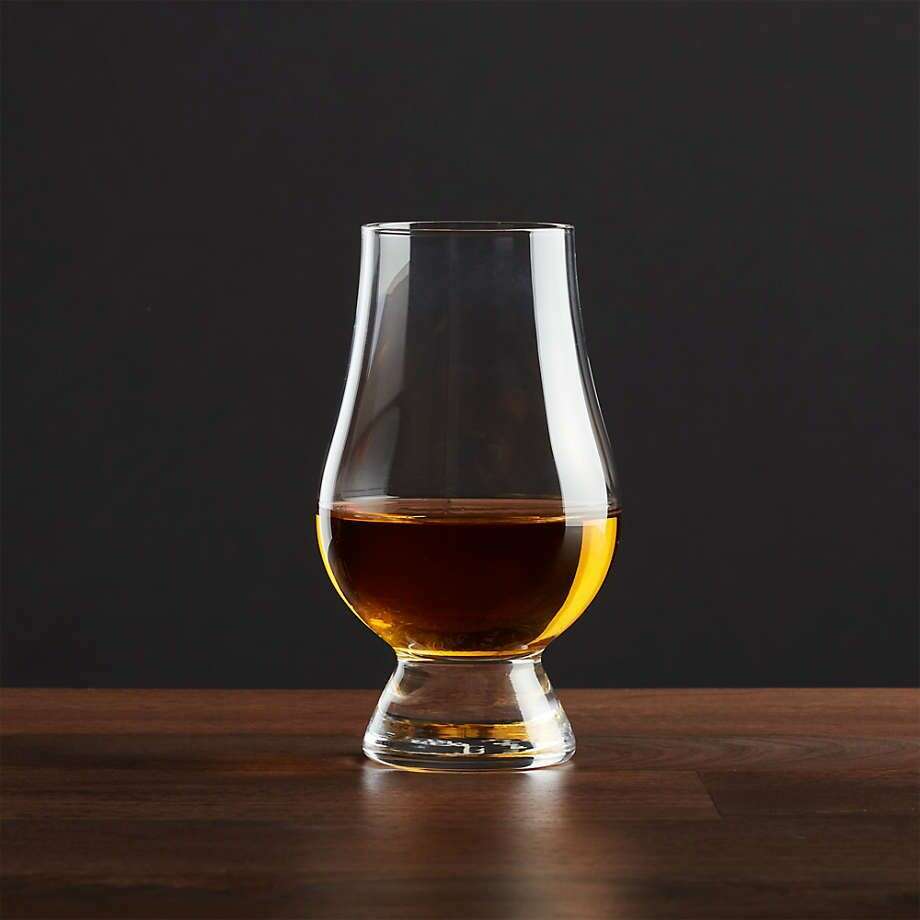
- Glassware matters more than the bottle. A Glencairn or a small tulip concentrates aroma. A wide tumbler lets it escape. If you own one nice glass, use it on the high-proof courses.
- Do not pair every course. Two or three bourbon courses in a five-course dinner is plenty. Wine, beer and water belong on the table too.
Building the dinner: three ready-made ladders
The three-bottle starter (under $110 all in). Old Grand Dad Whiskey for the opener, Four Roses Bourbon Small Batch through the middle, Elijah Craig Barrel Proof Batch C925 Bourbon for dessert. Three rungs, no gaps, and the two cheap bottles do the heavy lifting.
The wheated dinner. If the menu leans towards fish, chicken and pork rather than red meat, run Makers Mark Bourbon 1.0L as your spine and finish with Weller Antique 107 Wheated Bourbon Whiskey rather than a barrel-proof rye-forward bottle. Consistency of style across courses is its own kind of pairing.
The steakhouse dinner. Evan Williams Bottled-in-Bond to open, Wild Turkey Rare Breed Bourbon with the main, Booker's Bourbon Big Easy Batch 2026-01 with the chocolate. Loud, expensive, extremely good.
Where to shop the ladder
Everything above is in stock at Bourbon Central and ships fast. Browse the full bourbon collection to build your own ladder, or work from best sellers if you would rather start with the bottles that other people keep coming back to. If your dinner is running a mixed table, the whiskey collection and the wine collection cover the courses bourbon should sit out. And if you want to see what has just landed before September, new arrivals is the place to look.
One last thought as Bourbon Heritage Month arrives: the reason bourbon works at a dinner table is the same reason it was regulated so tightly in the first place — it is a spirit with an enormous flavour range that behaves predictably once you know the rules. Proof is the first rule. Everything else is preference.

