


The Right Glass for Bourbon (2026): Glencairn vs. Rocks vs. Copita — What Each One Actually Changes, and 8 Things Worth Owning

Glassware is the cheapest variable in bourbon. A bottle worth having costs $40 to $150. The glass you drink it from costs $20 to $30 and lasts the rest of your life. And unlike almost everything else people argue about online — barrel entry proof, warehouse floors, chill filtration — the glass is a variable you can actually test at home in ten minutes with one bottle.
It is also the variable most often oversold. The claim that a tasting glass "unlocks" flavours that were otherwise invisible is not quite right. What a glass does is manage the ratio of aroma to ethanol that reaches your nose. That is a real, measurable effect, and it is genuinely dramatic — but it does not run in one direction. The glass that makes a 90-proof bourbon bloom is the same glass that makes a 130-proof bourbon painful. Which is why the honest answer to "what's the best glass for bourbon" is a question back: at what proof, and are you nosing it or drinking it?
The 8 pieces in this guide


What a glass actually does
Three things, and only three things:
1. It sets the surface area of the liquid. A wide bowl exposes more whiskey to air, which means more evaporation, which means more aroma compounds lifting off. A narrow straight-sided glass exposes less.
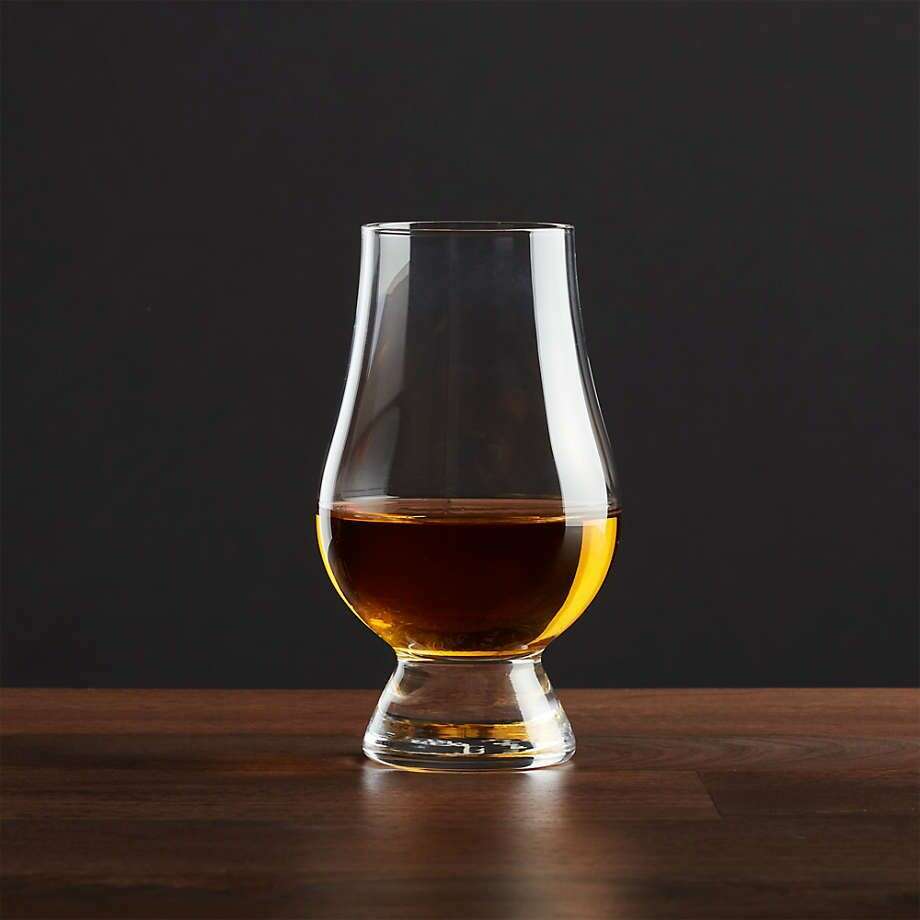
2. It sets the diameter of the opening. This is the important one. Everything that evaporates has to leave through the rim. A narrow rim concentrates it into a column; a wide rim lets it diffuse into the room before it reaches you. The Glencairn's tapered chimney is doing exactly this — it is a funnel, and it funnels everything, the caramel and the oak and the ethanol.
3. It sets how the glass sits in your hand. Less romantic, more real than people admit. A heavy base and a wide grip change how slowly you drink and how much of your palm heat reaches the liquid.
Notice what is not on that list: the glass does not add anything. Crystal versus soda-lime glass changes weight and clarity and how the light plays, not flavour. If a shop tells you the material changes the taste of the whiskey, they are selling you something.
The Glencairn: what it is for, and what it is bad at
The Amerit Glencairn Glass ($24.99) is the standard tasting glass for a reason. The wide bowl gives the whiskey room to evaporate, the taper concentrates the result, and the short stem keeps your hand off the bowl. Put a 90-proof bourbon in one and you will pick up detail — the difference between vanilla and butterscotch, the difference between new oak and old — that a straight-sided glass simply blurs.
Where it fails is the top of the proof ladder. Pour Elijah Craig Barrel Proof Batch C925 Bourbon ($69.99) at its uncut strength into a Glencairn, put your nose in, and you will get a face full of ethanol and very little else. The funnel does not discriminate. It concentrates the burn along with the aromatics, and once your olfactory receptors have been hit with that much alcohol vapour they stop reporting anything useful for a minute or two.
Two fixes, both boring and both effective. Nose from an inch above the rim rather than in it, mouth slightly open. Or add water — a few drops, then a few more, until the ethanol drops below the aromatics. That second fix is the whole argument of our guide to whether the water actually matters in bourbon, and it works far better on cask strength than any glass ever will. If barrel proof is where you spend most of your money, our barrel proof bourbon primer covers why those bottles behave so differently in the first place.
The rocks glass: the honest daily driver
The tasting-glass evangelists have made people slightly embarrassed about the tumbler, and they shouldn't have. A heavy rocks glass like the Nordic Custom Monogram Engraved Whiskey Glass ($29.99) is the correct glass for most of the bourbon most people actually drink — because most of the bourbon most people actually drink is not being analysed. It is being enjoyed, often with ice, often alongside something else, often while doing something else.
The wide rim that makes a tumbler a poor nosing glass is the same wide rim that keeps a 100-proof pour from being aggressive. It vents. It also fits a large ice format, which a Glencairn does not, and it has the thermal mass to keep a drink cold longer. A high-rye bourbon like Bulleit Bourbon ($37.09) is at its best exactly here: over one big cube, in a heavy glass, with no ceremony attached.
There is a real argument that the tumbler is the more useful of the two glasses to own if you only own one. We would still buy the Glencairn first — but only because tasting is the thing a glass can genuinely improve, and drinking mostly isn't.
The copita, the NEAT and the tulip
The copita is the sherry-nosing glass the Glencairn was derived from: same tulip shape, longer stem, thinner walls. In practice the difference from a Glencairn is small enough that owning both is a hobby rather than an upgrade. The NEAT glass — the one with the flared, almost trumpet-shaped rim — is the interesting outlier, because it is engineered to do the opposite of the Glencairn: the flare is meant to let ethanol escape sideways while heavier aroma compounds continue up the middle. Whether it truly does that is contested. What is not contested is that flared rims are more forgiving at high proof, which is the same conclusion you reach by nosing a Glencairn from an inch above.
The pour size nobody talks about
Glass shape gets all the attention and pour volume gets none, which is backwards. In a Glencairn, one ounce sits low in the bowl with a large air gap above it — that headspace is where the aroma collects, and it is the reason the glass works. Fill the same glass to three ounces and you have destroyed the effect: less headspace, less concentration, and now your nose is much closer to the liquid.
One ounce for tasting. Two for drinking. The "two fingers" rule is a bar measure, not a tasting measure, and in a tapered glass it is simply too much. If you are running a comparison — say Woodford Reserve Straight Bourbon Whiskey ($44.99) against Eagle Rare Kentucky Straight Bourbon Whiskey ($69.99), both around 90 proof and both aromatic enough to reward the exercise — pour an ounce of each into matching glasses. Matching matters more than which glass you chose. Our four-bottle flight guide covers the rest of the setup, and the nosing and scoring method is worth reading before your first side-by-side.
Ice, and the glass that has to hold it
If you drink bourbon cold, the glass decision is really an ice decision, and the ice decision is a dilution decision. A Whiskey Spherical Ice Tray Mold ($24.99) makes a single large sphere that fits a tumbler and melts far more slowly than the same mass of small cubes; a Whiskey Chilling Stones Set ($19.99) chills with no dilution at all, which sounds better than it is. We have given that argument its own piece — big cube vs. sphere vs. stones vs. a splash of water — because it turns out cold and wet are two different levers and most people are pulling the wrong one.
Decanters: furniture, not storage
A decanter like the James E. Pepper Decanter Barrel Proof Bourbon ($79.99) is a legitimately handsome object, and it arrives with bourbon in it. What it is not is a storage solution. A ground-glass stopper does not seal the way a cork and a capsule seal, and decanting a bottle into one roughly doubles the surface area of liquid exposed to a large volume of trapped air. If you are moving bourbon into a decanter for display, drink it inside a couple of months. Our guide to storing an open bottle works through what actually degrades whiskey in glass, and headspace is at the top of the list.
What to actually own
Two glasses and one ice mould covers essentially everything:
A tasting glass for anything new, anything expensive, and any side-by-side. A heavy tumbler for the pour you drink rather than study. A large-format ice mould so that the cold pour is chilled rather than watered.
Buy the tasting glass in a pair. A single one makes comparison impossible, and comparison is the entire point of owning it. Everything else — the copita, the second tumbler style, the decanter — is furnishing.
Browse the full bourbon collection for something worth putting in them, or the wider whiskey range if you want to test a glass across categories. If you are not sure where to start, the best sellers are the bottles our customers reach for most, and new arrivals is where the recent Kentucky releases land first. Then pour an ounce, wait two minutes before you nose it, and find out how much of the difference was the glass all along.

