


How to Store an Open Bottle of Bourbon (2026): What Actually Ruins It, How Long You Really Have, and 8 Bottles That Behave Differently

Bourbon does not age in the bottle. That is the one thing almost everyone knows, and it is true — a sealed bottle of Buffalo Trace Kentucky Straight Bourbon Whiskey bought in 2016 is chemically almost identical to one bought last week. Glass is inert. There is no wood, no evaporation, no interaction. Whiskey stops maturing the moment it leaves the barrel.
What almost nobody tells you is that this only holds while the bottle is sealed. The day you pull the cork, a different set of rules takes over — and those rules are why the bottle you were so excited about in March tastes flat and papery by November. It is not your palate playing tricks. The whiskey genuinely changed.
Here is what actually happens to an open bottle, how long you really have, and the eight bottles below that behave in noticeably different ways once air gets in.
The 8 bottles in this guide


The only variable that matters: headspace
Oxidation in whiskey is driven overwhelmingly by the ratio of air to liquid in the bottle — what distillers call headspace. A bottle that is 90% full has almost no air in it and will taste the same in two years as it does tonight. A bottle with two inches left in the bottom is roughly 80% air, and that whiskey will noticeably shift inside of two or three months.
The change is not "spoilage." Nothing goes bad or becomes unsafe. What happens is that oxygen slowly reacts with the esters and aldehydes that carry a bourbon's fruit and sweetness. The bright notes — cherry, orange peel, caramel, vanilla — are the first to thin out. What is left behind is the oak, the tannin and the ethanol, which is why a long-neglected bottle tastes drier, woodier and somehow hotter than you remember, even though the proof has not moved.
The practical rule most drinkers land on: a bottle above the shoulder is fine indefinitely. A bottle between the shoulder and the halfway mark has about a year. A bottle below a third is on a two-to-three-month clock. Below that, drink it or use it — a fading pour makes a perfectly good Old Fashioned long after it has stopped being worth nosing neat.
Proof is the second variable, and it works in your favour
Higher-proof bourbon oxidizes more slowly. Ethanol is a preservative, the aromatic compounds are more stable in a higher-alcohol solution, and there is simply more flavour concentration to lose before you notice any of it going.
This is the single best argument for keeping a barrel-proof bottle around. Elijah Craig Barrel Proof Batch C925 Bourbon ($69.99) arrives north of 120 proof and is remarkably durable — a half-empty bottle will still be recognisably itself a year later. Wild Turkey Rare Breed Bourbon ($63.99) behaves the same way, and because it is a batched, non-vintage product, you are also not losing a one-off you cannot replace. If you are the kind of drinker who opens six bottles and finishes none of them, the cask-strength shelf is the forgiving one.
The flip side: standard 80-to-90-proof bourbon is the most vulnerable. Woodford Reserve Straight Bourbon Whiskey ($44.99) at 90.4 proof is built on exactly the delicate fruit-and-baking-spice notes that oxygen strips first. It is not a bottle to nurse for two years — it is a bottle to drink. The same goes for Buffalo Trace Kentucky Straight Bourbon Whiskey, which is 90 proof and gets much of its charm from a soft caramel top note that flattens out well before the oak does.
Light and heat: the two things you can actually control
Oxidation is unavoidable once a bottle is open. UV light and heat cycling are not, and they do more damage faster than most people believe.
Ultraviolet light breaks down the compounds bourbon picked up from the barrel char, and it does it to the colour as well as the flavour — a bottle left in a sunny window will visibly pale over a summer. That is not a cosmetic issue; the colour is coming from the same phenolic compounds carrying the flavour. If a bottle sits anywhere that gets direct sun for part of the day, move it tonight. A closed cabinet, a low shelf, a box — anything opaque is enough.
Heat is worse, and specifically fluctuating heat. Every warm-cool cycle expands and contracts the liquid, pushes vapour past the cork and pulls fresh air back in — effectively topping up the oxygen supply and accelerating everything above. A stable 60–70°F closet beats a beautiful bar cart above a radiator or next to a west-facing window. This is the same physics that makes a rickhouse work, just running against you instead of for you; we covered how temperature swings drive whiskey in and out of the wood in what a rickhouse actually does to bourbon.
Store bottles upright. Always.
Wine gets stored on its side to keep the cork wet. Bourbon must not be. At 40% ABV and up, sustained contact with high-proof spirit degrades natural cork, and a bourbon cork is not a wine cork — it is a short stopper glued to a plastic or wooden top, not a long, compressed plug. Lay a bourbon down for a few months and you risk a cork that crumbles into the whiskey, leaks, or falls apart the next time you twist it.
The corollary: check your corks. Wax-dipped bottles like Maker'S Mark Bourbon 375Ml ($22.99) handle repeated opening well, but any bottle that has been opened and reclosed a hundred times will eventually have a stopper that no longer seals. If a cork is dry, cracked or loose in the neck, a strip of plastic wrap under it before you push it home costs nothing and genuinely slows the exchange.
The half-bottle trick, and why it works
The cleanest solution to headspace is not a gadget — it is buying less whiskey at once. A 375ml bottle drunk over the same two months as a 750ml never develops the same air ratio, because you are working through the same proportion of a smaller volume. Maker'S Mark Bourbon 375Ml is the most useful example on our shelf: it is the same wheated bourbon, and for anyone who drinks a pour or two a week, it will taste better on its last night than a 750 would.
The other version of the same idea is decanting downward. When a bottle drops below a third, pour what is left into a smaller sealed glass vessel — a clean 200ml or 375ml bottle works — so the whiskey is again nearly full to the neck. This is the one storage intervention that measurably works, and it costs nothing. What does not work reliably: inert gas sprays (fine in theory, inconsistent in practice on a bottle you open weekly) and vacuum stoppers (they pull volatile aromatics out of solution, which is the opposite of the goal).
Finished bourbon is on a shorter clock than you think
Bourbons finished in a second cask deserve their own warning. Breckenridge PX Sherry Cask Finish Bourbon Whiskey ($74.09) carries a layer of dried-fruit and raisin sweetness borrowed from Pedro Ximénez sherry casks, and those secondary-cask compounds are among the first to fade with air exposure. A finished bottle that sits half-empty for a year does not just get quieter — it loses the specific thing you paid extra for, and drifts back toward tasting like a standard bourbon. If you keep one open, keep it near the front of the rotation. There is more on how that second barrel works in our guide to finished bourbon.
How to tell if a bottle has actually faded
Memory is unreliable, and most people who think a bottle has "gone off" are comparing it to an idealised version of the first pour. The fix is a control. When you open something you plan to keep for a long time, pour a small amount into a sealed sample vial and set it aside full to the top — it will barely change. Six months on, taste them side by side in identical glassware and you will know in seconds whether the difference is real.
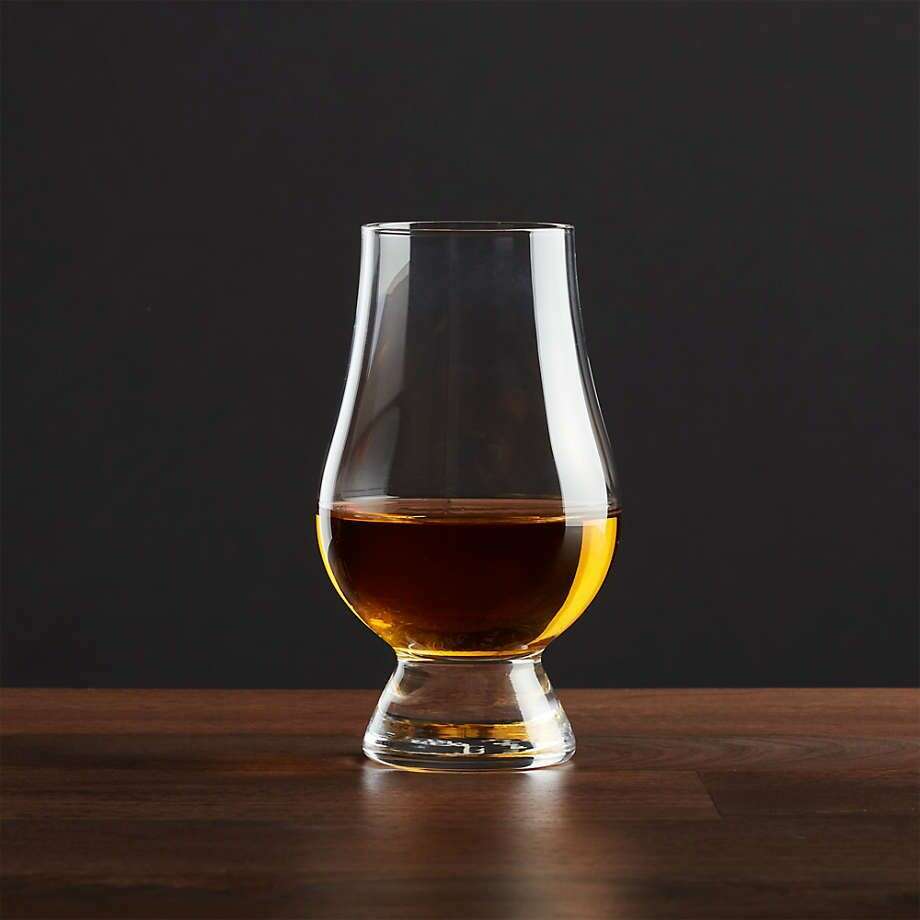
Identical glassware is doing real work in that sentence. A tulip-shaped nosing glass like the Amerit Glencairn Glass ($24.99) concentrates aromatics at the rim, which is exactly where oxidation losses show up first. In a rocks glass you may not notice a bottle has thinned out until it is far gone. We laid out the full mechanics of a controlled side-by-side in our four-bottle home flight guide.
The bottles that are hardest to ruin
If you want whiskey that tolerates neglect, look for bonded and high-proof bottlings. Evan Williams Bottled-in-Bond ($38.09) is 100 proof by law, made in a single season at a single distillery, and priced so that finishing it is never painful — the practical definition of a low-stakes bottle. The bonded category exists because of a nineteenth-century fight about consistency, which we walk through in how to read a bourbon label.
The short version of everything above: proof high, bottle full, cork tight, upright, dark, cool, and drink it. Bourbon is not a wine cellar project. It rewards being opened.
Set your shelf up properly
If today's audit turned up a bottle that has been sitting in the light for two years, the honest answer is usually to pour it into a cocktail and replace it. Start with the full Bourbon collection, where the barrel-proof and bonded bottles above all live, or browse Whiskey for rye and everything else in the American category. If you would rather be pointed at proven bottles than sort 800 of them, Best Sellers is the short list, and New Arrivals is where anything just landed shows up first.
And if you are staring at three half-empty bottles right now: consolidate the one that is lowest into a smaller vessel, move all three out of the light, and open something you will actually finish.

