


How to Drink Scotch: Neat, With Water, On the Rocks, or Highball? (National Scotch Day 2026 Guide)

Ask three scotch drinkers the right way to drink it and you'll get four opinions, at least one of them delivered with alarming confidence. Here's the truth ahead of National Scotch Day on July 27: neat, with water, over ice, and lengthened into a highball are all correct — they're just different tools for different whiskies and different Tuesdays. Distillers themselves use all four. This guide explains what each serve actually does to the liquid in your glass, which of our bottles shines in each format, and how to run the four-serve experiment at home with a single dram. It's the third installment in our Scotch Day series, after peated vs. unpeated and the regions explained.
The 8 bottles behind this guide


Neat: the full picture, no edits
Neat — room temperature, nothing added — is the only serve that shows you everything the distiller bottled: texture, weight, and the delicate top notes that cold suppresses and dilution washes out. It rewards whiskies with something to say at full volume. Macallan Sherry Oak 12 Year ($99.99) is the definitive neat pour on our shelf — sherry-seasoned oak, dried fruit and gingerbread that flatten noticeably over ice. The Glenlivet 12 Year ($75.09) and Glenfiddich 12 Year ($69.09) are the classic Speyside neat pours for newer drinkers: orchard fruit and honey at a friendly 40%, nothing to brace against. Give any neat pour five minutes in the glass before judging it — whisky opens with air, and the second sip never matches the first.
The water drop: the professional's cheat code
A few drops of still water — drops, not a splash — break the surface tension, unlocking aroma compounds that alcohol was holding in solution. It's how blenders taste whisky professionally, and it's not "watering down": it's turning the volume knob on aroma up, not down. The higher the proof or the denser the whisky, the more water gives back. Peated malts respond most dramatically of all: Laphroaig 10 Year ($59.99) sheds a layer of iodine and reveals a sweet, almost vanilla core, and Lagavulin 16 Year ($99.99) unfolds from dense smoke into orchard fruit and sherry with two or three drops. Ardbeg 10 Year ($78.09), bottled at 46% and non-chill-filtered, is practically designed for the experiment. Why these smoky malts behave this way is the subject of our peated scotch guide.
On the rocks: one big cube, not a handful
Ice does two things: it chills, which mutes aroma and tames intensity, and it dilutes gradually as it melts. That's a cost for a delicate Speyside and a gift for anything muscular or sweet. The 2026 consensus is that ice is no longer a crime against whisky — the crime is small ice. A handful of fridge cubes melts fast and drowns the dram; one large, slow-melting cube keeps the drink cold and undiluted for twenty minutes. Oban Little Bay ($57.99), matured partly in small casks for extra richness, was practically built for a big cube, and Highland Park 12 Year ($67.99) — heathery honey with a wisp of smoke — stays expressive cold where lighter malts go silent. Bowmore 12 Year ($64.09) is the classic gateway rocks pour for smoke-curious drinkers: chill takes the edge off the peat and leaves the toffee.
The highball: the serve of summer 2026
One part scotch, three parts ice-cold soda, tall glass packed with ice, a twist of lemon — the scotch highball is having its biggest moment in decades, and July is exactly when you want one. Blends built for mixing are the value play here: Johnnie Walker Black Label ($37.99) makes a smoky-caramel highball that costs less per drink than most canned cocktails, Dewar's White Label ($26.99) keeps it light and grassy, and Buchanan's Deluxe 12 Year ($38.09) splits the difference with orange-peel richness. Among single malts, triple-distilled Auchentoshan 12 Year ($49.99) is the sleeper highball malt — clean and citrusy, it sparkles under soda — and Talisker 10 Year ($89.99) makes the cult smoky-peppery version bartenders order for themselves. Our complete highball guide covers ratios, glassware and the four rules most bars get wrong.
Glassware and the small rituals
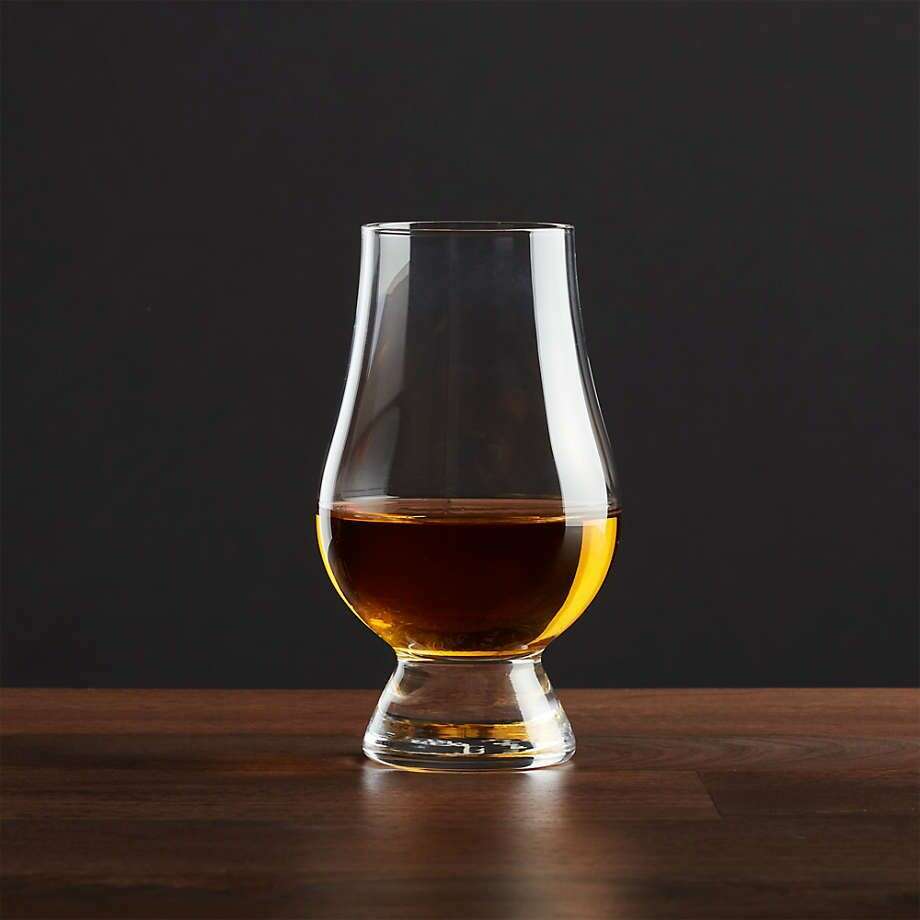
You don't need a cabinet of crystal, but shape does matter. A tulip-shaped glass — the Glencairn is the standard — narrows at the rim to concentrate aroma, and since most of whisky's flavor is smell, that's not a gimmick; it's the whole game. Use it for neat pours and water-drop tasting. A heavy-bottomed rocks glass earns its keep for the big-cube serve, and any tall glass works for highballs so long as it's been in the freezer for ten minutes first. Two more rituals worth keeping: hold the glass by the base so your hand doesn't warm the spirit, and add water with a straw or teaspoon rather than a free pour — the line between "opened up" and "washed out" is about four drops wide.
The four-serve experiment
Here's the fastest way to learn your own palate, and a perfect National Scotch Day ritual: pour one whisky four ways. You need about four ounces total — one ounce neat, one with three drops of water, one over a single big cube, one topped with three ounces of soda. Taste in that order, note where the whisky gets better and where it disappears. A rich pour like Oban 14 Year ($84.99) will likely peak neat or with water; a lighter dram will surprise you in the highball. There is no wrong answer — the answer is just yours. If you're still building your palate from zero, start with our scotch for beginners guide, and if you're coming over from bourbon, bourbon vs. scotch explains what to expect in the glass.
Stock the experiment
Every bottle above is in stock and ships fast from our warehouse — though with National Scotch Day traffic building, several single malts are down to their last few bottles. Browse the full scotch collection for the complete shelf, cross-shop the whiskey collection if your loyalties are flexible, or see what everyone else is drinking in our best sellers. However you take your dram on July 27 — neat, wet, cold, or tall — take it on purpose.

